Nifty Chronicles

Market Overview & Analysis

Part 1 · 1980–1995

Before Nifty: The BSE Era

Long before the Nifty existed, the Indian market was a floor of shouting brokers at the Bombay Stock Exchange. In that pre-electronic era, a promoter, a fraudster and a war would each leave a permanent mark — and out of a scandal would come the regulator and the exchange that built modern India.

1980Scam / Black Swan

The Reliance Short Squeeze: Dhirubhai vs the Bears

Reliance Industries was planning an issue of convertible debentures when a cartel of bear operators began shorting the stock aggressively. Standing on the other side was Dhirubhai Ambani, who reportedly funded a ring of friendly brokers — remembered in market folklore as the 'Friends of Reliance' — to buy every share the bears sold. The short sellers were cornered: when settlement came, there were no shares left to deliver.

The standoff was so severe that the Bombay Stock Exchange suspended trading for three consecutive sessions to broker a compromise. It was a corner-the-shorts squeeze in the GameStop mould, four decades before GameStop existed — and it planted the lore that shorting Reliance is 'playing with fire', a reputation the promoter traded on for the rest of his career.
1982Scam

The Second Reliance Squeeze: Calcutta Bears Routed

Two years later, a Calcutta-based group of brokers tried the same trade again, shorting Reliance heavily around a rights and public issue. This time Dhirubhai arranged for foreign associates to absorb the shorted stock, so that when the sellers came to deliver, no shares existed in the market.

Rather than let the shorts escape, Ambani then sold them the very shares they needed — at a large profit. The bear cartel was wiped out a second time. It cemented, in the folklore of Dalal Street, a near-myth around the promoter; charming in the domestic arena, but a story that would be turned on its head in 2023 when a foreign short seller attacked the Adani Group.

1991Scam

The Harshad Mehta Scam

Harshad Mehta, the 'Big Bull', siphoned money out of the banking system using bank receipts and the ready-forward market, and poured it into stocks, sending the Sensex vertical on his buying. When the mechanism unravelled in 1992, the market that had been levitating on paper collapsed.

The aftermath was brutal: the market fell roughly 50% and took about three years to fully recover, trading then happening entirely on the BSE. But out of the wreckage came the institutional rebuild — a newly empowered SEBI as a genuine regulator, and in 1992 the founding of a new electronic exchange that would break the BSE's monopoly and eventually launch the Nifty.

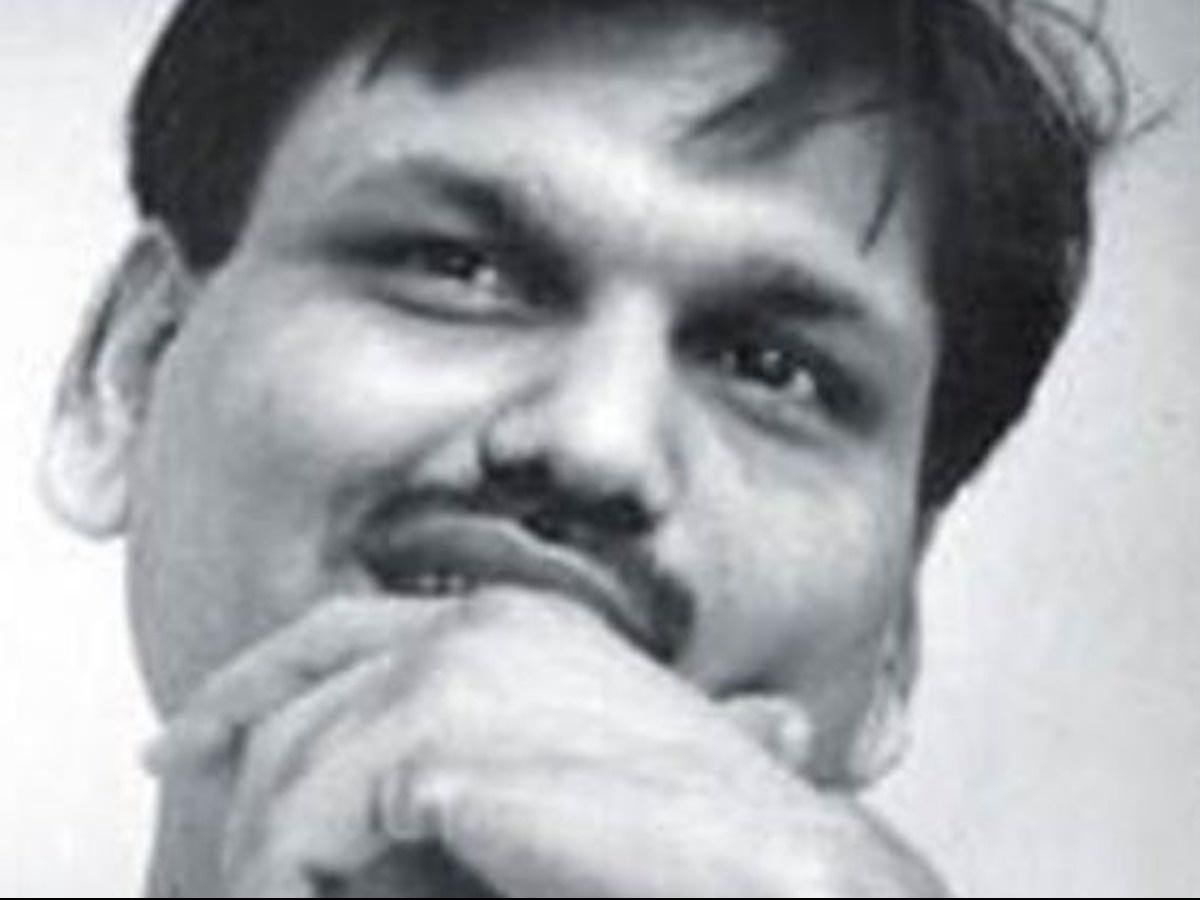
Portrait of stockbroker Harshad Mehta
Harshad Mehta, the 'Big Bull' at the centre of the 1991 securities scam. Image via Wikimedia Commons.
1991Policy / Structural

IPO Pricing Is Deregulated (Manmohan Singh)

Until 1991 the Controller of Capital Issues fixed IPO prices at artificially low levels. In a sweeping liberalisation that year, Finance Minister Manmohan Singh freed companies to set their own issue prices.

Issuers responded with expensive IPOs — some even offering cash discounts to lure retail near the end of weak subscriptions. It was a quiet structural shift that looks eerily familiar today: the opening of an era in which IPO pricing systematically transferred wealth from uninformed retail to informed players, the backdrop to every overpriced issue from Reliance Power in 2008 to Paytm and LIC.

1992–94Structural

The Birth of the NSE

The National Stock Exchange was set up in 1992, received its exchange licence from SEBI in 1993, and began operations in 1994 — built around screen-based electronic trading that made the BSE's open-outcry floor obsolete.

In 1996 it launched the Nifty 50, the index of its fifty largest stocks that would become synonymous with the Indian market, and later built the derivatives segment that defines trading today. If the Harshad Mehta scandal was the wreckage, the NSE was arguably the rebuilding: modern, transparent, and electronic from day one.

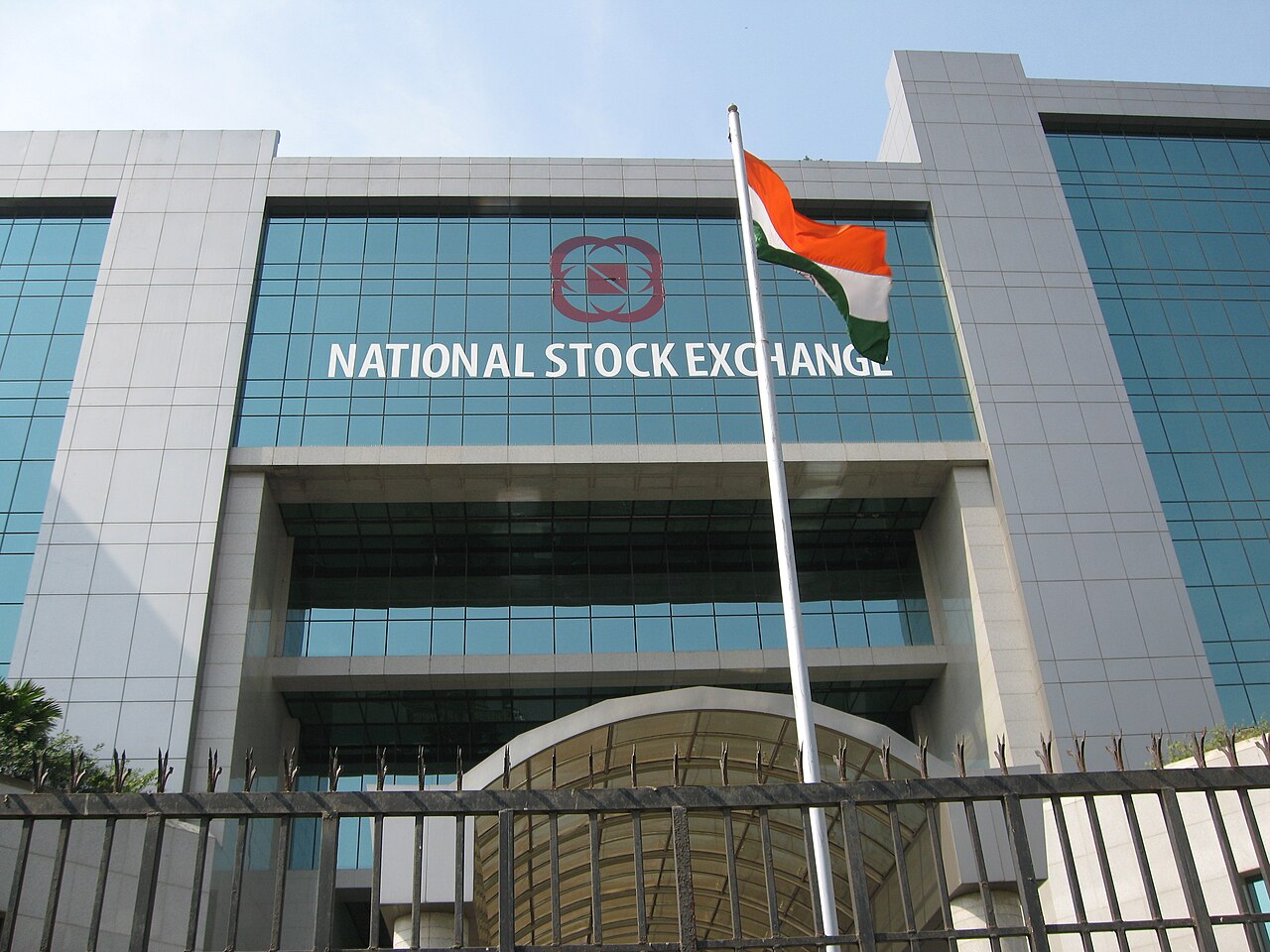
National Stock Exchange headquarters, Mumbai
The National Stock Exchange headquarters at Bandra-Kurla Complex, Mumbai. Image via Wikimedia Commons (CC BY-SA).
1999Geopolitical

The Kargil War: A Disappointingly Small Dip

India's biggest military confrontation in a generation — the Kargil War against Pakistan — arrived in 1999, yet the market's reaction was strikingly modest. The Nifty fell only about 5–6% and recovered strongly afterward.

Some of that strength was borrowed from the simultaneous dot-com boom, so the drawdown wasn't purely war-driven. But the number stuck, and it became the baseline for a rule that would be tested again and again for the next quarter-century: when India and Pakistan go to war, the Nifty historically sheds only a few percent before recovering.

Indian Air Force targeting footage of the Kargil operation
Footage from the Indian Air Force's 1999 Kargil operation. Image via Wikimedia Commons (government of India).
2000Crash / Scam

The Dot-Com Bust and the Ketan Parekh Scam

India's first modern tech bubble burst along with the global one. IT stocks that had run up furiously between 1998 and 2000 — with names like Pentasoft touching ₹2,000–3,000 before becoming worthless — crashed. Around the same time came the Ketan Parekh ('Captain Parekh') scam, India's second great market manipulation.

Only the leaders survived: TCS, Infosys, HCL Technologies and Wipro, who absorbed the business of the vanished. The Nifty fell hard from its late-90s peak and did not bottom until around 2003 near the 930 level — after which it would begin a 100%-plus climb toward 2,100 by 2005.

December 2001Geopolitical

The Parliament Attack and the Four Red Months

The December 2001 attack on the Indian Parliament rattled the market, but again the numbers were small: the Nifty fell only about 4–5%, in keeping with the Kargil pattern.

A quieter milestone came the same year. 2001 was the last time — for nearly a quarter-century — that the Nifty and Sensex closed in the red for four consecutive months. That losing streak stood unmatched until the mid-2020s, making 2001 a rare yardstick for prolonged bearish stretches in an otherwise relentlessly rising market.

2003Structural / Bull Market

The Maruti IPO Ignites the Bull Market

In 2003 one car company changed the mood of the entire primary market. Maruti Udyog's IPO — a landmark privatisation — was heavily oversubscribed and shifted sentiment, reigniting a frozen IPO market almost overnight.

It is remembered as the moment the real bull run began. The Nifty rose from its 2003 low near 930 to roughly 2,100 by 2005, and the era is now recalled as the start of India's biggest structural bull market — a positive counterpoint to the Reliance Power top of 2008, and proof of how a single well-received issue can unlock years of gains.